 Business License

The Unsung Hero: Why the Carbide Substrate is the Heart of Your PCD Tool
In the world of ultra-precision machining, where abrasive composites, advanced ceramics, and high-silicon aluminum alloys reign, Polycrystalline Diamond (PCD) tools are the undisputed champions. We rightfully celebrate the PCD tip—that super-hard, wear-resistant marvel that machines with unparalleled finish and longevity. But what about the foundation upon which this diamond edge is built? Today, we shift the spotlight to the **unsung hero: the carbide substrate.**
Choosing the right carbide for your PCD tool isn't just a technical detail; it's a fundamental decision that dictates performance, reliability, and cost-efficiency. Let's dive into why this "body" of the tool matters as much as its "cutting soul."
**The Crucial Role of the Carbide Substrate: More Than Just a Holder**
The substrate performs a symphony of critical functions:
1. **Mechanical Support & Toughness:** While PCD provides extreme hardness, it can be brittle. The carbide substrate acts as a shock absorber, providing the essential toughness and flexural strength to withstand cutting forces, vibrations, and intermittent cuts without catastrophic failure. It's the sturdy backbone.
2. **Brazing Partner:** The PCD tip is permanently bonded to the substrate via high-temperature brazing. The substrate must have excellent brazeability—its thermal expansion coefficient must be carefully matched to diamond to minimize residual stresses at the joint. A poor match leads to weak bonds, causing tip delamination or cracking under thermal cycling.
3. **Heat Sink:** Although diamond has superb thermal conductivity, the cutting zone generates intense heat. The carbide substrate helps dissipate this heat away from the critical cutting edge, preventing premature thermal degradation of both the brazing material and the diamond layer itself.
4. **Machinability & Tool Geometry:** Before brazing, the substrate is precision-ground to create the required tool geometry (rake angles, clearance angles, chipbreakers). Post-brazing, it's also what gets clamped into the tool holder. Its consistency and machinability are vital for achieving precise final tool dimensions and secure mounting.
**Key Properties of an Optimal PCD Substrate: The Selection Checklist**
Not all carbides are created equal. For PCD tools, the substrate is a specialized grade, engineered with specific characteristics:
* **Cobalt Content & Grain Size:** A **fine-grained carbide** with a **medium cobalt binder content (typically 6-10%)** offers the ideal balance. Fine grains enhance hardness, wear resistance, and surface finish for brazing. Medium cobalt provides the necessary toughness and brazeability without excessive softness.
* **Transverse Rupture Strength (TRS):** This measures the substrate's ability to resist breaking under bending stress. A high TRS value is non-negotiable for stable, interrupted, or heavy-duty machining.
* **Thermal Properties:** The substrate must withstand brazing temperatures (~700-900°C) without significant softening or deformation. Its thermal conductivity and expansion profile are tailored for diamond.
* **Surface Integrity & Consistency:** A flawless, defect-free surface is critical for achieving a void-free, high-strength braze joint. Any porosity or impurity at the interface is a potential failure point.
**The Consequences of a Mismatch: When the Foundation Fails**
Ignoring substrate specifications leads directly to the shop floor headaches you're trying to avoid with PCD in the first place:
* **Tip Loss (Delamination):** The most common failure. Caused by poor braze joint strength due to mismatched thermal expansion, improper surface prep, or using a substrate not designed for diamond brazing.
* **Substrate Fracture:** An overly hard, low-cobalt substrate may be too brittle, cracking under load, especially in milling or interrupted cutting.
* **Premature Wear or Edge Chipping:** If the substrate deforms or wears excessively behind the PCD tip, it undermines the support for the ultra-hard edge, leading to microfractures and chipping in the diamond layer.
**Beyond Standard: Tailoring the Substrate for the Application**
The "one-size-fits-all" approach doesn't work. Advanced applications demand tailored solutions:
* **Heavy-Roughing & Interrupted Cuts:** Prioritize **higher toughness**. Substrates with slightly elevated cobalt content or specialized binder technologies (e.g., adding other alloying elements) enhance shock resistance.
* **High-Precision Finishing & Micro-tools:** Prioritize **highest rigidity and stability**. Ultra-fine-grained carbides with tight tolerance on geometry ensure impeccable runout, vibration dampening, and flawless surface finishes.
* **Special Geometries (Complex Form Tools, Small Bores):** The substrate's pre-braze machinability becomes paramount. A grade that allows for intricate grinding without burning or micro-cracking is essential.
**A Partnership for Peak Performance**
Think of the PDC tool as a champion athlete. The PCD tip is the skill and technique—the blazing speed or perfect form. The carbide substrate is the core strength, stamina, and bone structure—it allows that skill to be applied powerfully and consistently without breaking down.
**Investing in a premium PCD tip mounted on an inappropriate substrate is like fitting a Formula 1 tire on a cheap alloy wheel—it will never deliver its true potential and will likely fail spectacularly.**
When specifying your next PCD tool, engage with your tooling partner in a conversation that goes beyond just the diamond grade. Ask about the substrate. A knowledgeable manufacturer understands this synergy and selects or engineers the carbide base to perfectly complement the diamond tip for your specific material and machining operation.
By honoring the critical role of the carbide substrate, you unlock the full promise of PCD technology: not just incredible wear resistance, but also **unshakeable reliability, predictable performance, and ultimately, a lower cost per part machined.**
**The edge is diamond. The strength is carbide. The performance comes from their perfect union.**
Recently Posted
-
Beyond Hardness: Why Cemented Carbide Wear Parts Are Your Best Defense Against Unplanned Downtime
August 28, 2026In the world of heavy industry, maintenance planners lose sleep over one thing: unplanned stoppage. When a wear part fails, the cl Read More
 -
CB50742: The Cast Iron Brake Disc Repair Insert You Need to Know About
August 28, 2026If you work in automotive machining or heavy equipment maintenance, you know that brake disc repair is one of the toughest jobs in Read More
 -
Hardmetal (Cemented Carbide) Slips and Chucks
July 29, 2026In precision machining and workholding applications, hardmetal—also known as cemented carbide or tungsten carbide—plays a critical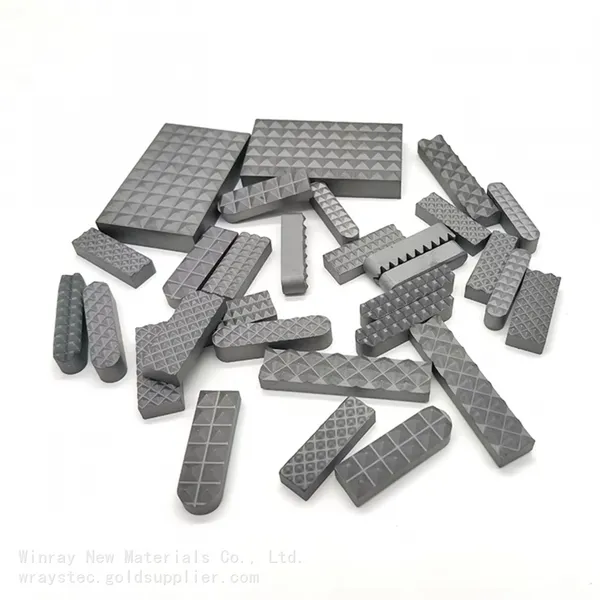 Read More
 -
Carbide Tipped Saw Blades: Unlocking Superior Cutting Performance Across Industries
July 16, 2026In the modern industrial ecosystem, precision cutting is non-negotiable. Whether you are processing engineered wood for high-end f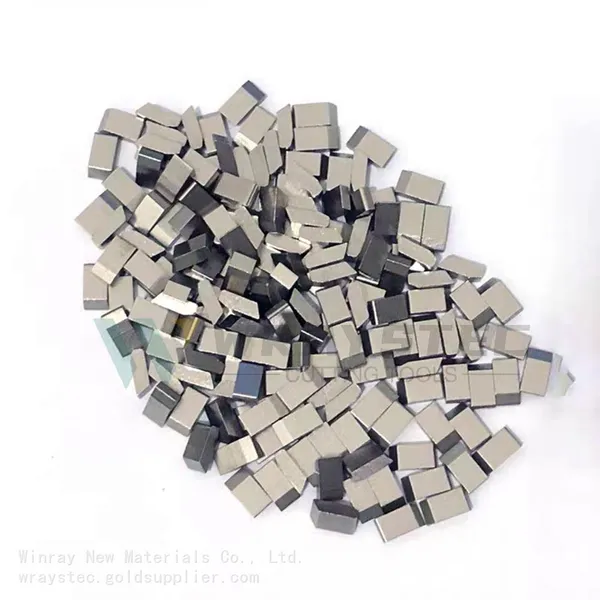 Read More

Contact Us
Recommended Products
-
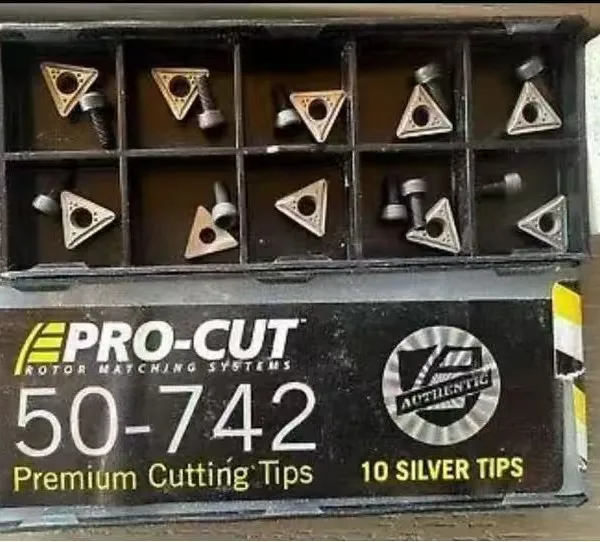
 Wear Resistance CB50742 Carbide Bits for Brake Lath Machine TPGX110308 Hi10 for Cast IronUS$ 1.05 - 2MOQ: 10 Blades
 -
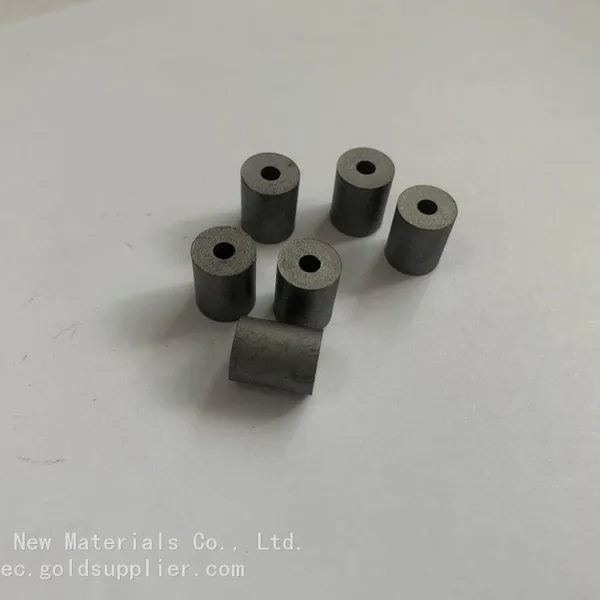
Wear-resistant Cemented Carbide Stamping ComponentsNegotiableMOQ: 1 Unit
-
YG11 Tungsten Carbide Heavy-Duty Wear RingNegotiableMOQ: 1 Unit
-
C2 Ammco Positive Rake Carbide Bits for RELS Model 45016 R08/10/12 RadiusUS$ 2.5 - 3MOQ: 50 Blades
-
C2 Ammco Positive Rake Carbide Bits for RELS Model Brake Lathe 45016 RELS Carbide Bits RelacementsUS$ 2.5 - 3MOQ: 50 Blades
-
Holder Number 45703 Inserts Number CB90488 Replaces Accuturn Carbide Bit for Hard SteelUS$ 1.35 - 2.82MOQ: 10 Blades
-
CB90488 Replaces Accuturn Part Number 433796 Fits Accuturn Tool Holders: 433763, 433764, 434056, 434057, 434286, 433779US$ 1.35 - 2.82MOQ: 10 Blades
-
CB90488 Positive Rake Carbide Inserts for Accuturn Models 8911, 8922, 8944, 8989, 8991, 8993US$ 1.35 - 2.82MOQ: 10 Blades
-
Ammco 6914 Insert Can be Used on 6 Edges With Ammco Twin Cutter (6950)/ RELS Twin Cutter (40095) /negative Rake Tool Holder Set # 45701US$ 1.05 - 2MOQ: 10 Blades
-
Negative Rake Carbide Inserts For Ammco Models 4000, 4100, 7000 Lathes CB6914/6918-10US$ 1.05 - 2MOQ: 10 Blades
-
Positive Rake Carbide Bits for Ammco Model 2000 Brake Lathe CB6914-10US$ 1.05 - 2MOQ: 10 Blades
-
Carbide Milling Tools HNGX0906 45 Degree Double Side Heavy Duty MachiningNegotiableMOQ: 10 Blades
-
Carbide Chuck Jaw Inserts for Pipe Chuck Clamp MechanicalNegotiableMOQ: 100 Blades
-
Modern Design High Precision Serdi Carbide Pilot for Guide Cutting MachineNegotiableMOQ: 10 Blades
-
Valve Seat Boring Machine Carbide Incisors Tungsten Carbide Valve Seat InsertsNegotiableMOQ: 10 Blades
-
ISO Standard and Best Price Carbide Tips Ss10 Carbide Stone Cutting TipsNegotiableMOQ: 20 Kilograms
-
Tungsten Carbide Composite Rods Welding Composite Rods High Wear Resistance for AgriculturalNegotiableMOQ: 10 Kilograms
-
Tungsten Carbide Composite Rod YD Rods YD-5 60/40 With Nickel Matrix AlloyNegotiableMOQ: 10 Kilograms
-
U-shape 40*4.4/4.7/5.0*15mm Diameter Granite Marble Stone Cutting Disc Saw Blade SegmentsNegotiableMOQ: 1 Blade
-
Diamond Saw Blades for Marble Block CuttingNegotiableMOQ: 1 Blade