 Business License

Solid Carbide End Mill for HRC58 Hardened Steel – D8*20*8*60L-4F with Bronze Coating
Machining hardened steel (up to HRC58) presents unique challenges: high cutting forces, heat generation, and rapid tool wear. Without the right end mill, manufacturers face poor surface finish, frequent tool changes, and increased cost per part.
In this post, we examine a solid carbide end mill designed specifically for HRC58 and below: D8*20*8*60L-4F with a bronze coating. We will cover its geometry, coating benefits, application recommendations, and why this tool deserves a place in your CNC tooling inventory.
1. Product Specifications – Breaking Down D8*20*8*60L-4F
Understanding the dimensions helps machinists select the correct tool for their CNC machine and workpiece.
| Parameter | Value | Meaning |
|---|---|---|
| Cutting diameter (D) | 8 mm | Standard size for slotting, contouring, and finishing |
| Flute length (Lc) | 20 mm | Suitable for shallow to medium-depth cuts |
| Shank diameter (d) | 8 mm | Rigid clamping, good for high-speed machining |
| Overall length (OAL) | 60 mm | Compatible with most CNC holders (ER collet, hydraulic, shrink-fit) |
| Number of flutes | 4 | Balanced chip evacuation and surface finish for steel |
The 4-flute design offers better core strength than 2-flute or 3-flute end mills, making it ideal for hardened steel where tool rigidity is critical.
2. Bronze Coating – More Than Just Color
The bronze coating (often AlTiN or TiSiN-based with a bronze appearance) is engineered for high-temperature alloy and hardened steel applications.
Key benefits of bronze coating for HRC58 steel:
Heat resistance – Bronze coatings maintain hardness up to 800–1000°C, preventing edge build-up and plastic deformation.
Low friction coefficient – Reduces cutting forces and improves chip flow, especially in dry or minimal-quantity-lubrication (MQL) machining.
Wear protection – Extends tool life 2–3x compared to uncoated or TiN-coated carbide end mills.
Surface finish – The smooth coating layer reduces built-up edge (BUE), producing better surface quality on mold and die components.
⚙️ *Technical note: Bronze coating is often misunderstood as purely decorative. In reality, the color indicates a specific multi-layer coating formula optimized for ferrous materials above 45 HRC.*
3. Performance on HRC58 Hardened Steel
This D8*20*8*60L-4F end mill is designed for pre-hardened and hardened steel such as:
Mold steels: P20, H13, 718H (up to 48–52 HRC)
Tool steels: SKD11, D2, A2 (HRC55–58)
General structural steels: 4140, 4340 (hardened condition)
Recommended cutting parameters for HRC55–58 steel:
| Operation | Cutting speed (Vc) | Spindle speed (RPM) | Feed per tooth (Fz) | Feed rate (F) |
|---|---|---|---|---|
| Roughing | 80–120 m/min | 3,200–4,800 RPM | 0.02–0.05 mm/tooth | 250–900 mm/min |
| Finishing | 100–140 m/min | 4,000–5,600 RPM | 0.01–0.03 mm/tooth | 160–670 mm/min |
Note: Adjust feed/speed based on machine rigidity, coolant method, and workholding. Reduce engagement (ae/ar) for full slotting.
Why this end mill works:
The short flute length (20mm) increases tool stiffness, reducing deflection and chatter.
4 flutes provide more cutting edges for higher material removal rate (MRR) in hardened steel.
Bronze coating allows higher cutting speeds without thermal failure.
4. Typical Applications in Mold & Die Machining
This tool geometry is widely used in mold base finishing, core/cavity roughing, and general metalworking where HRC58 is the upper limit.
Example use cases:
Mold & die industry – Finishing side walls of injection molds.
Aerospace components – Trimming hardened brackets.
Automotive tooling – Machining punch and die sets.
General job shops – One-tool solution for various hardened steel parts.
Machinists often search for “end mill for HRC58 steel” or “bronze coated carbide end mill” – this product directly addresses those queries.
5. Why Choose Solid Carbide Over HSS or Cobalt for Hardened Steel?
High-speed steel (HSS) and cobalt end mills struggle above 45 HRC due to insufficient hot hardness. Solid carbide retains its edge temperature up to 1100°C, making it the only practical choice for HRC58.
Comparison table:
| Property | HSS | Cobalt (M42) | Solid Carbide |
|---|---|---|---|
| Max hardness (workpiece) | ≤35 HRC | ≤45 HRC | ≤65 HRC |
| Cutting speed capability | Low | Medium | High |
| Wear resistance | Poor | Moderate | Excellent |
| Bronze coating effectiveness | Limited | Moderate | Optimal |
For HRC58 steel, a solid carbide end mill with bronze coating is not a luxury – it is a necessity.
Recently Posted
-
Beyond Hardness: Why Cemented Carbide Wear Parts Are Your Best Defense Against Unplanned Downtime
August 28, 2026In the world of heavy industry, maintenance planners lose sleep over one thing: unplanned stoppage. When a wear part fails, the cl Read More
 -
CB50742: The Cast Iron Brake Disc Repair Insert You Need to Know About
August 28, 2026If you work in automotive machining or heavy equipment maintenance, you know that brake disc repair is one of the toughest jobs in Read More
 -
Hardmetal (Cemented Carbide) Slips and Chucks
July 29, 2026In precision machining and workholding applications, hardmetal—also known as cemented carbide or tungsten carbide—plays a critical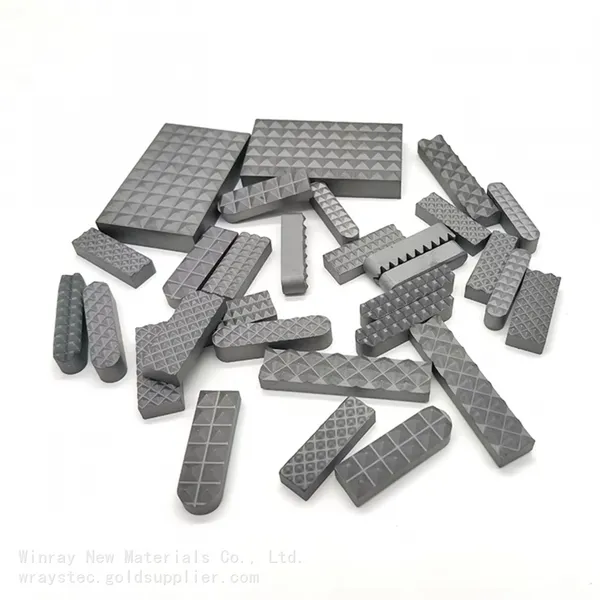 Read More
 -
Carbide Tipped Saw Blades: Unlocking Superior Cutting Performance Across Industries
July 16, 2026In the modern industrial ecosystem, precision cutting is non-negotiable. Whether you are processing engineered wood for high-end f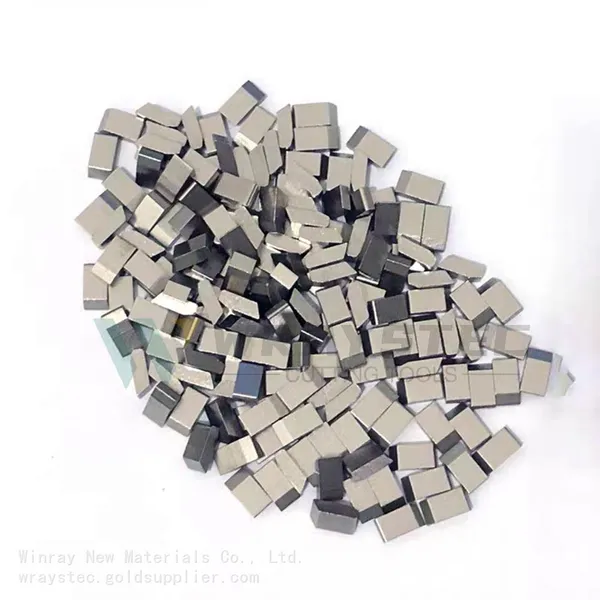 Read More

Contact Us
Recommended Products
-
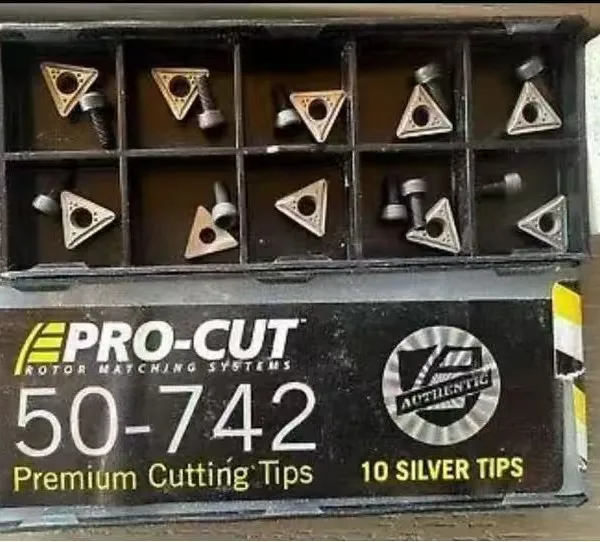
 Wear Resistance CB50742 Carbide Bits for Brake Lath Machine TPGX110308 Hi10 for Cast IronUS$ 1.05 - 2MOQ: 10 Blades
 -
Wear-resistant Cemented Carbide Stamping ComponentsNegotiableMOQ: 1 Unit
-
YG11 Tungsten Carbide Heavy-Duty Wear RingNegotiableMOQ: 1 Unit
-
C2 Ammco Positive Rake Carbide Bits for RELS Model 45016 R08/10/12 RadiusUS$ 2.5 - 3MOQ: 50 Blades
-
C2 Ammco Positive Rake Carbide Bits for RELS Model Brake Lathe 45016 RELS Carbide Bits RelacementsUS$ 2.5 - 3MOQ: 50 Blades
-
Holder Number 45703 Inserts Number CB90488 Replaces Accuturn Carbide Bit for Hard SteelUS$ 1.35 - 2.82MOQ: 10 Blades
-
CB90488 Replaces Accuturn Part Number 433796 Fits Accuturn Tool Holders: 433763, 433764, 434056, 434057, 434286, 433779US$ 1.35 - 2.82MOQ: 10 Blades
-
CB90488 Positive Rake Carbide Inserts for Accuturn Models 8911, 8922, 8944, 8989, 8991, 8993US$ 1.35 - 2.82MOQ: 10 Blades
-
Ammco 6914 Insert Can be Used on 6 Edges With Ammco Twin Cutter (6950)/ RELS Twin Cutter (40095) /negative Rake Tool Holder Set # 45701US$ 1.05 - 2MOQ: 10 Blades
-
Negative Rake Carbide Inserts For Ammco Models 4000, 4100, 7000 Lathes CB6914/6918-10US$ 1.05 - 2MOQ: 10 Blades
-
Positive Rake Carbide Bits for Ammco Model 2000 Brake Lathe CB6914-10US$ 1.05 - 2MOQ: 10 Blades
-
Carbide Milling Tools HNGX0906 45 Degree Double Side Heavy Duty MachiningNegotiableMOQ: 10 Blades
-
Carbide Chuck Jaw Inserts for Pipe Chuck Clamp MechanicalNegotiableMOQ: 100 Blades
-
Modern Design High Precision Serdi Carbide Pilot for Guide Cutting MachineNegotiableMOQ: 10 Blades
-
Valve Seat Boring Machine Carbide Incisors Tungsten Carbide Valve Seat InsertsNegotiableMOQ: 10 Blades
-
ISO Standard and Best Price Carbide Tips Ss10 Carbide Stone Cutting TipsNegotiableMOQ: 20 Kilograms
-
Tungsten Carbide Composite Rods Welding Composite Rods High Wear Resistance for AgriculturalNegotiableMOQ: 10 Kilograms
-
Tungsten Carbide Composite Rod YD Rods YD-5 60/40 With Nickel Matrix AlloyNegotiableMOQ: 10 Kilograms
-
U-shape 40*4.4/4.7/5.0*15mm Diameter Granite Marble Stone Cutting Disc Saw Blade SegmentsNegotiableMOQ: 1 Blade
-
Diamond Saw Blades for Marble Block CuttingNegotiableMOQ: 1 Blade