 Business License

PCD Blanks for High‑Impact Stamping: Why Impact Resistance Matters
Looking for impact‑resistant PCD blanks for stamping? Learn how precision PCD discs handle heavy loads, reduce chipping, and extend tool life.
1. Introduction
If your manufacturing process involves high‑force stamping, punching, or forming of non‑ferrous metals, composites, or abrasive materials, you already know: the weak link is often the tool’s cutting or pressing element.
Standard tungsten carbide can wear out quickly. But even Polycrystalline Diamond (PCD) – known for its extreme hardness – can fail if it is not designed for impact resistance.
In this post, we look at PCD blanks specifically engineered for high‑impact stamping applications – and why the right PCD disc makes all the difference.
2. What Are PCD Blanks?
A PCD blank is a composite material made of synthetic diamond particles sintered onto a carbide substrate at high temperature and pressure.
The result:
Diamond hardness for wear resistance
Carbide toughness for structural support
But not all PCD blanks are the same.
For stamping, you need blanks that can absorb repeated shock loads without chipping, cracking, or delaminating.
3. The Challenge: Impact in Stamping
Stamping is different from continuous turning or milling.
In stamping, the tool strikes the workpiece – often at high speed and with sudden force. This creates impact stress, not just abrasive wear.
Common problems with standard PCD in stamping include:
Edge chipping – small fractures along the cutting edge
Micro‑cracking – invisible cracks that grow under repeated hits
Fracture – complete failure of the diamond layer
These issues lead to:
Poor part quality
Unplanned downtime
Higher tooling costs
That’s why impact‑resistant PCD blanks are not a luxury – they are a necessity.
4. Key Properties of Impact‑Resistant PCD Blanks
So what makes a PCD blank “impact‑resistant”?
4.1 Optimized Diamond Grain Size
Coarser diamond grains improve fracture toughness at the cost of surface finish. For stamping, a medium‑coarse grade offers the best balance of wear resistance and impact strength.
4.2 High‑Quality Sintering Process
Poor sintering creates internal voids – weak points where cracks start. High‑pressure, high‑temperature (HPHT) sintering eliminates porosity.
4.3 Carbide Substrate Match
The carbide backing must have a similar coefficient of thermal expansion and good bonding strength. A mismatched substrate increases the risk of delamination under impact.
4.4 Precision Grinding
Even the best PCD blank will fail if ground with micro‑cracks. Professional grinding with diamond wheels reduces residual stress.
5. Application Examples
Impact‑resistant PCD blanks are used in:
Stamping non‑ferrous metals – aluminum, copper, brass
Punching carbon‑fiber composites – where impact plus abrasion is severe
Forming sintered materials – such as metal powders or ceramics
High‑speed stamping of electrical contacts – where millions of hits are required
In each case, the right PCD disc delivers longer tool life and more consistent stamped edges.
6. What to Look for When Buying PCD Blanks for Stamping
When evaluating PCD blanks, ask your supplier:
| Factor | Why it matters |
|---|---|
| Impact test data | Real stamping validation, not just hardness numbers |
| Grain size | Affects toughness vs. finish trade‑off |
| Substrate type | Must match your brazing or clamping method |
| Edge preparation | Honed or chamfered edges reduce initial chipping risk |
| Consistency | Batch‑to‑batch variation kills process stability |
If your current PCD blanks are cracking under repeated stamping cycles, it’s time to switch to a grade designed for impact, not just wear.
7. Conclusion
PCD blanks remain one of the best materials for stamping abrasive or non‑ferrous materials – but only if they can survive impact.
Standard PCD grades optimized for continuous cutting often fail under stamping’s shock loads.
For high‑impact stamping, choose PCD blanks specifically engineered for fracture toughness, edge integrity, and consistent performance over millions of cycles.
👉 Need a PCD blank that can take a hit? Contact us with your stamping parameters (material, thickness, punch speed, expected tool life). We will recommend the right PCD grade – or prepare sample discs for your own impact test.
Recently Posted
-
Beyond Hardness: Why Cemented Carbide Wear Parts Are Your Best Defense Against Unplanned Downtime
August 28, 2026In the world of heavy industry, maintenance planners lose sleep over one thing: unplanned stoppage. When a wear part fails, the cl Read More
 -
CB50742: The Cast Iron Brake Disc Repair Insert You Need to Know About
August 28, 2026If you work in automotive machining or heavy equipment maintenance, you know that brake disc repair is one of the toughest jobs in Read More
 -
Hardmetal (Cemented Carbide) Slips and Chucks
July 29, 2026In precision machining and workholding applications, hardmetal—also known as cemented carbide or tungsten carbide—plays a critical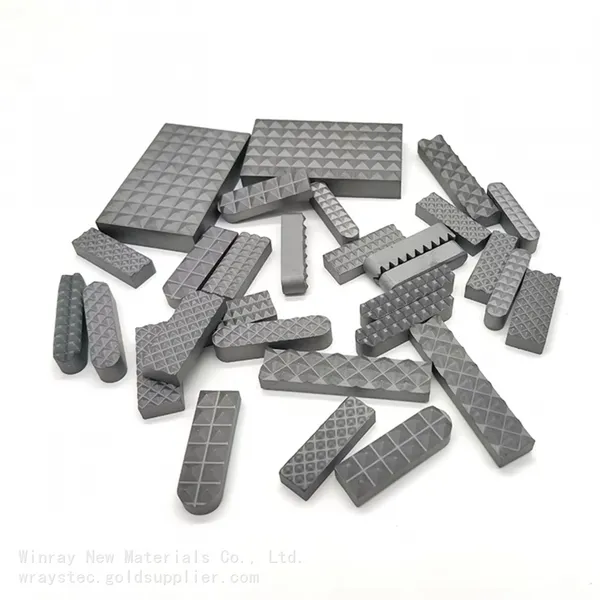 Read More
 -
Carbide Tipped Saw Blades: Unlocking Superior Cutting Performance Across Industries
July 16, 2026In the modern industrial ecosystem, precision cutting is non-negotiable. Whether you are processing engineered wood for high-end f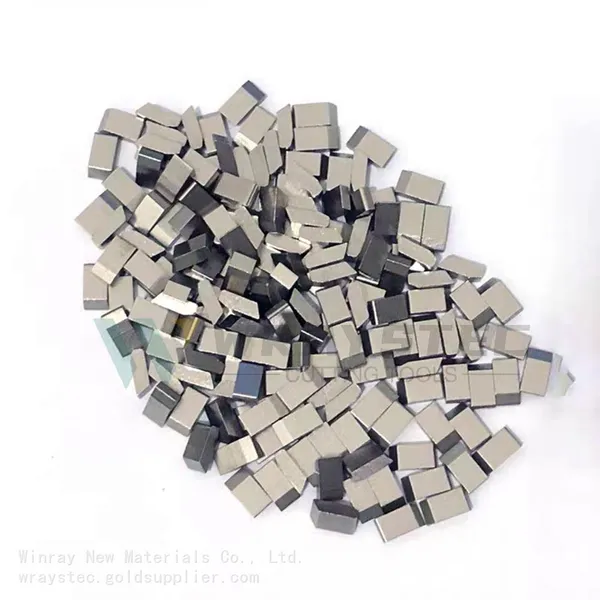 Read More

Contact Us
Recommended Products
-
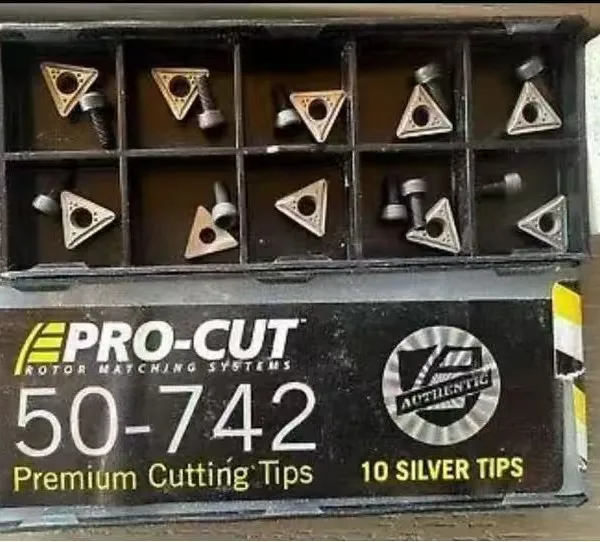
 Wear Resistance CB50742 Carbide Bits for Brake Lath Machine TPGX110308 Hi10 for Cast IronUS$ 1.05 - 2MOQ: 10 Blades
 -
Wear-resistant Cemented Carbide Stamping ComponentsNegotiableMOQ: 1 Unit
-
YG11 Tungsten Carbide Heavy-Duty Wear RingNegotiableMOQ: 1 Unit
-
C2 Ammco Positive Rake Carbide Bits for RELS Model 45016 R08/10/12 RadiusUS$ 2.5 - 3MOQ: 50 Blades
-
C2 Ammco Positive Rake Carbide Bits for RELS Model Brake Lathe 45016 RELS Carbide Bits RelacementsUS$ 2.5 - 3MOQ: 50 Blades
-
Holder Number 45703 Inserts Number CB90488 Replaces Accuturn Carbide Bit for Hard SteelUS$ 1.35 - 2.82MOQ: 10 Blades
-
CB90488 Replaces Accuturn Part Number 433796 Fits Accuturn Tool Holders: 433763, 433764, 434056, 434057, 434286, 433779US$ 1.35 - 2.82MOQ: 10 Blades
-
CB90488 Positive Rake Carbide Inserts for Accuturn Models 8911, 8922, 8944, 8989, 8991, 8993US$ 1.35 - 2.82MOQ: 10 Blades
-
Ammco 6914 Insert Can be Used on 6 Edges With Ammco Twin Cutter (6950)/ RELS Twin Cutter (40095) /negative Rake Tool Holder Set # 45701US$ 1.05 - 2MOQ: 10 Blades
-
Negative Rake Carbide Inserts For Ammco Models 4000, 4100, 7000 Lathes CB6914/6918-10US$ 1.05 - 2MOQ: 10 Blades
-
Positive Rake Carbide Bits for Ammco Model 2000 Brake Lathe CB6914-10US$ 1.05 - 2MOQ: 10 Blades
-
Carbide Milling Tools HNGX0906 45 Degree Double Side Heavy Duty MachiningNegotiableMOQ: 10 Blades
-
Carbide Chuck Jaw Inserts for Pipe Chuck Clamp MechanicalNegotiableMOQ: 100 Blades
-
Modern Design High Precision Serdi Carbide Pilot for Guide Cutting MachineNegotiableMOQ: 10 Blades
-
Valve Seat Boring Machine Carbide Incisors Tungsten Carbide Valve Seat InsertsNegotiableMOQ: 10 Blades
-
ISO Standard and Best Price Carbide Tips Ss10 Carbide Stone Cutting TipsNegotiableMOQ: 20 Kilograms
-
Tungsten Carbide Composite Rods Welding Composite Rods High Wear Resistance for AgriculturalNegotiableMOQ: 10 Kilograms
-
Tungsten Carbide Composite Rod YD Rods YD-5 60/40 With Nickel Matrix AlloyNegotiableMOQ: 10 Kilograms
-
U-shape 40*4.4/4.7/5.0*15mm Diameter Granite Marble Stone Cutting Disc Saw Blade SegmentsNegotiableMOQ: 1 Blade
-
Diamond Saw Blades for Marble Block CuttingNegotiableMOQ: 1 Blade